
The complete cargo picture
For lumber, steel, or building materials, include all pieces or bundles, packaging, dimensions, and weight. Identify mixed sizes or items with different handling instructions.
SUPER B-TRAIN TRANSPORTATION / TWO DECKS. ONE PLAN.
A two-trailer move starts with a clear picture of the entire shipment. For lumber, steel, and building materials, share what is moving, how it is packaged, and what both sites need.
Discuss your shipment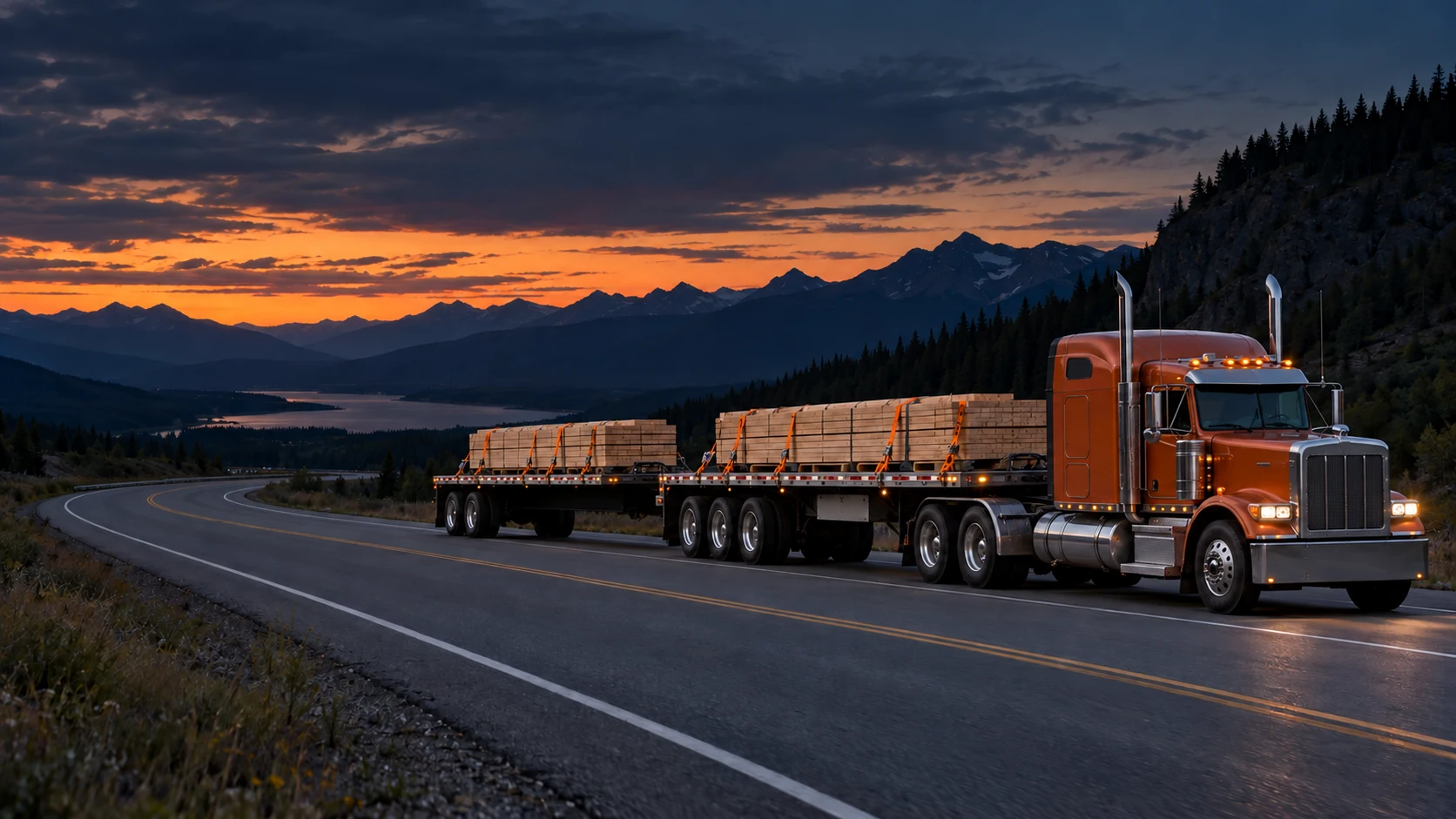
The full cargo list, with units.
Two trailers, considered together.
Handling, site access, and timing.
01 / START WITH WHAT’S MOVING.
Super B-train inquiries benefit from a complete cargo list and clear site information. A familiar commodity name does not tell the full story of a particular shipment.
For lumber, steel, or building materials, include all pieces or bundles, packaging, dimensions, and weight. Identify mixed sizes or items with different handling instructions.
Describe the loading and unloading equipment and any instructions from the shipper and receiver. Share site-access information so suitability can be discussed alongside the load itself.
For recurring shipments, give the expected frequency and typical cargo. Explain how much the load changes between trips, and keep each shipment’s details current as orders are finalized.
02 / PREPARE YOUR INQUIRY.
The first inquiry should make the shipment easy to understand. Share a complete picture of the cargo and sites, then confirm the equipment and arrangements for that particular move.
List the commodity, quantity, package dimensions, and total weight. Include individual item weights when you know them and explain any differences between bundles or pieces.
Include instructions for loading and unloading, the cargo packaging, and known tarping or securement requirements. Flag any questions that the shipping or receiving team still needs to resolve.
Provide both locations, preferred dates, appointment requirements, and site-access details. Do not assume a previous delivery arrangement will automatically fit a different load or equipment combination.
Equipment suitability, availability, timing, pricing, and the agreed shipment details need to be confirmed. Update the cargo list if quantities, dimensions, packaging, or weights change after the initial conversation.
Both start with the cargo, route, and handling needs. The Super B-train option discussed here uses two linked open-deck trailers, so the complete shipment and access at both sites need to be considered together. The equipment choice should follow the actual load requirements.
Yes. It can help explain a recurring lane or a familiar commodity. Also provide the current cargo list and identify changes in weight, dimensions, packaging, timing, or site instructions so the new shipment can be reviewed on its own details.
Share the information you have and clearly mark estimates or details still to be confirmed. Update the inquiry when the final quantities, dimensions, and weights are known. Sending an inquiry does not confirm equipment availability or book transportation.
Have a Super B-train shipment in mind? Send your cargo list, locations, and timing, and let’s start working through the details.
Let’s talk freight